

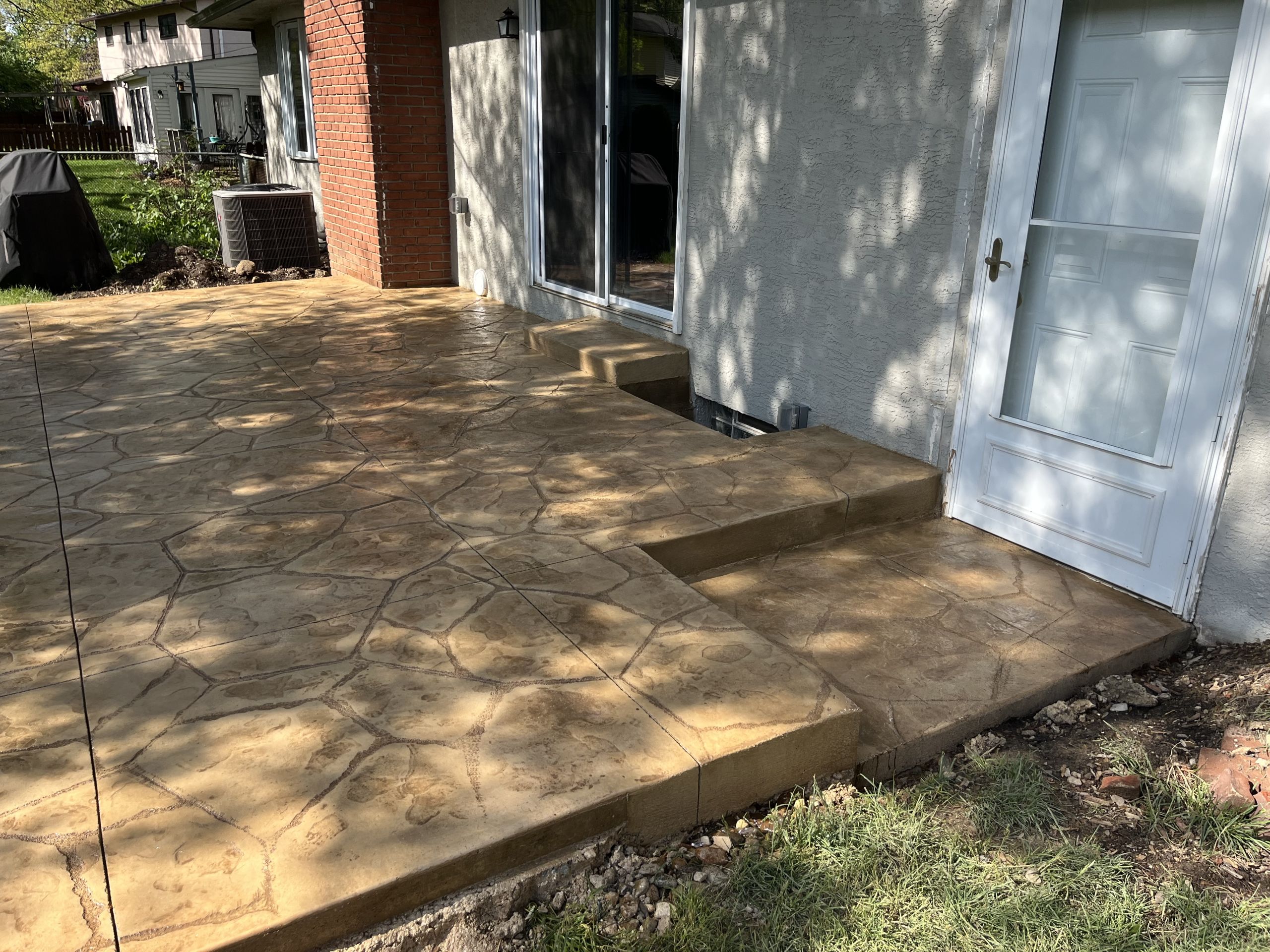
If you’re planning a new patio, driveway, or walkway in Central Ohio, chances are you’ve been going back and forth between two popular options: stamped concrete vs. pavers in Columbus, Ohio. Both look great in photos. Both can add real value to your home. But they perform very differently over time, especially here in Central Ohio, where the ground freezes in winter and thaws in spring, year after year.
Many people assume concrete is going to be the expensive option. In reality, when the quotes come back, pavers often cost twice as much as stamped concrete. If you’re budgeting carefully, that gap matters.
We’ve been laying concrete across Columbus and the surrounding area since 2003 and this is one of the questions we get most often during estimates. Here’s an honest breakdown to help you make the right call for your project and budget.
What Is Stamped Concrete?
Stamped concrete is poured as a single slab, then pressed with textured molds while still wet to create patterns that mimic stone, brick, slate, cobblestone, and more. Color can be added to the mix or applied to the surface, giving you a wide range of looks, all from one continuous, solid pour. The result is a surface that feels custom and high-end but holds together as one unified piece.
One of the most popular styles getting installed right now is wood plank stamping: concrete that’s made to look like old hardwood floors or a weathered deck. People who want that rustic, farmhouse aesthetic love it, and unlike actual wood, it needs no staining, no sealing every season, and no worrying about rot.
What Are Pavers?
Pavers are individual units, usually made from concrete, brick, or natural stone, that are set into a prepared base of compacted gravel and sand. Each piece is placed by hand, one at a time, with joints filled using sand or polymeric material. They’ve been around for centuries, and there’s a reason for that. But “traditional” doesn’t always mean better.
How They Stack Up
Upfront Cost
Stamped concrete typically runs 50–100% less than pavers—it’s not uncommon to see a paver quote come in at double the price of stamped concrete for the same area. Because it’s poured in one continuous process, labor time is significantly lower than individually setting hundreds of pavers. For a typical Columbus-area patio or driveway, you’ll generally spend less per square foot with stamped concrete than with a quality paver installation.
That said, neither option is cheap if done right. Low bids on either product usually mean shortcuts somewhere: in the base preparation, the mix design, or the sealing. Be skeptical of prices that seem too good to be true.
Durability in Ohio Weather
Ohio winters are tough on any outdoor surface. The freeze-thaw cycles we get here work against both options, just in different ways.
Ohio soils can expand by inches during intense freeze-thaw cycles. Larger concrete slabs handle this well because they move as a whole. Pavers, being made up of many smaller individual pieces, carry more risk of individual movement, and once a paver shifts, it may not settle back into place cleanly.
With pavers, individual pieces can shift, settle, or heave over time as the ground moves beneath them. Weeds and grass can push up through the joints. If one paver cracks or gets stained, you can pull it out and replace just that piece, which is a genuine advantage. But keeping a paver surface level and clean over 10–15 years takes real, ongoing attention.
With stamped concrete, the entire slab moves as one. No shifting joints, no weeds pushing through. A properly poured and sealed slab handles Ohio winters very well. The key phrase there is properly poured: base prep, concrete mix, control joint placement, and sealing all matter a great deal. Done right, a stamped concrete patio or driveway can easily last 25 years or more with minimal maintenance.
One more thing worth knowing if you’re considering pavers for a driveway specifically: most paver driveways actually require a concrete base underneath anyway to provide the support needed for vehicles. At that point, you’re paying for concrete regardless, and then adding the cost and maintenance of pavers on top of it.
Appearance and Design Flexibility
Both options offer strong design variety. Pavers have a handcrafted, natural look that many homeowners love, and the slight color variation between individual pieces gives them a character that’s hard to replicate.
Stamped concrete gives you a more seamless, consistent appearance. The design and selection process is also simpler: pavers come with so many material and style combinations that the choices can feel overwhelming. With stamped concrete, you get a color and pattern solution for most preferences without the decision fatigue. It works especially well for larger areas, like big driveways and expansive patios, where you want a cohesive, clean look.
Repairs
Pavers have a clear edge here. If one unit cracks or stains badly, you replace it–simple.
With stamped concrete, repairs are harder to blend invisibly. Matching the original color and texture of a patch to the surrounding slab takes skill, and it’s rarely a perfect match. This is another reason quality installation matters so much upfront: a well-poured slab with properly placed control joints is far less likely to crack in unwanted spots.
Maintenance
This is where the two options diverge more than most people expect.
Stamped concrete needs to be resealed every 3–5 years, depending on use: a job that typically takes about an hour or two to complete. If the color has faded over time, it can be touched up every 5–10 years. That’s a pretty manageable maintenance schedule.
Pavers are a different story. The joints need either yearly sealing or constant weed maintenance; think of it less like a hardscape and more like a garden bed that you never stop tending. On top of that, pavers may need to be pulled up every few years to re-adjust the sub-base if settling has occurred. That’s not a small job.
What We See Most Often With Stamped Concrete vs. Pavers in Columbus, Ohio
When Columbus property owners reach out to us, the conversation usually comes down to two things: budget and long-term maintenance. Stamped concrete tends to win on both counts for most people. The upfront cost is lower, and because there are no individual joints or units to shift, there’s less that can go wrong year over year in Ohio’s climate.
Pavers remain a great choice for homeowners or business owners who love the look and are willing to invest the maintenance time, but it’s important to go in with realistic expectations.
Which Should You Choose?
Here’s the honest answer: it depends on what you’re prioritizing.
Choose stamped concrete if:
- You want a lower upfront cost without sacrificing appearance
- You prefer a seamless, clean finished look over a handcrafted one
- You want a surface that requires less long-term fussing
- You’re working with a contractor who knows how to pour it correctly
Choose pavers if:
- The handcrafted, natural aesthetic is something you feel strongly about
- Being able to swap out individual pieces over the years matters to you
- You’re prepared for the ongoing maintenance that comes with the territory
For most Central Ohio properties, stamped concrete hits the sweet spot of value, durability, and curb appeal. But we always walk through both options during our estimates—because the right answer for your yard, your budget, and how you actually use your outdoor space is the only answer worth giving.
Let’s Talk Through Your Project
Still weighing stamped concrete vs. pavers in Columbus, Ohio? We’re happy to walk through your options with you in person. Learn more about who we are and how we work, and when you’re ready, reach out to schedule your free estimate.