

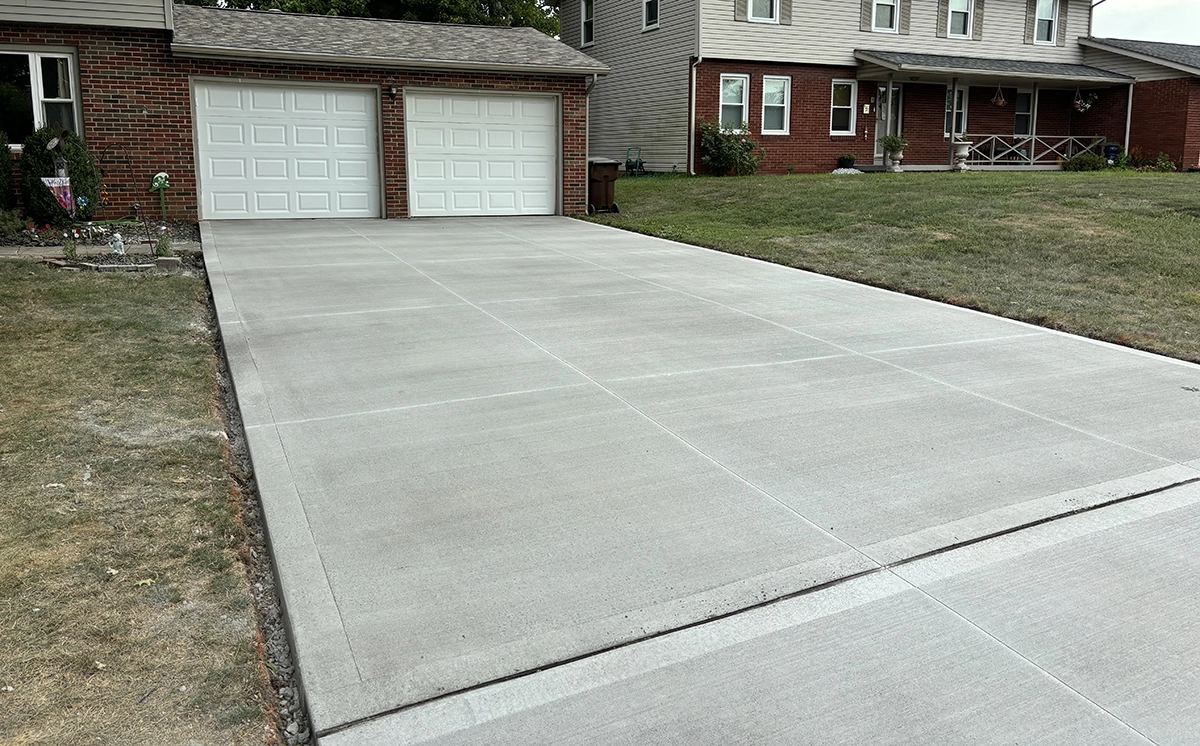
Every spring, our phones start ringing with homeowners who want a new concrete driveway or patio poured “as soon as possible.” But the weather doesn’t always cooperate with that urgency, and pouring too early can do more harm than waiting a few extra weeks.
Figuring out the best time of year to pour concrete starts with understanding the climate in Columbus, not just general rules of thumb you’d find in a national guide. Ohio’s weather swings hard between seasons, which affects how concrete cures, how strong it ends up, and how long it lasts before it needs repair.
Here’s what Central Ohio homeowners should know before scheduling a pour.
When is the Best Time to Pour Concrete in Columbus?
We get asked the question “When is the best time to pour concrete?” on almost every call—and the answer has more to do with the temperature than the calendar.
Fresh concrete needs steady, moderate warmth for its first several days to cure at full strength. In the Columbus region, that window typically falls in two stretches:
- Late April to early June: After the last hard frost, before summer humidity sets in
- Mid-September to mid-October: After peak summer heat, before the first freeze
Both periods tend to bring daytime highs in the 60s and low 70s, which is close to ideal for a controlled cure.
What Weather Conditions Matter for Pouring Concrete?
Temperature gets most of the attention, but it isn’t the only factor that matters. The best weather to pour concrete actually depends on three factors working together: moderate air temperature, manageable humidity, and calm winds. The table below offers an at-a-glance breakdown.
Condition |
Ideal Range |
Why It Matters |
|---|---|---|
| Air temperature | 50°F-75°F | Keeps the curing reaction steady, not rushed or stalled |
| Ground temperature | Above 40°F | Cold soil risks freezing before set; hot soil can pull moisture from the mix too fast |
| Humidity | Moderate | Very low humidity speeds up evaporation; very high humidity slows curing |
| Wind | Light | Strong wind pulls surface moisture away too fast, risking cracks |
| Forecast | Dry for 24-48 hours | Rain shortly after a pour can pit or wash out the surface |
Ohio’s spring weather complicates these conditions, since the right temperatures often arrive alongside unpredictable rains. That’s why an experienced concrete contractor watches the radar as closely as the thermometer.
Concrete Pouring Seasonal Comparison Guide
Spring: March, April, May
Spring offers a long runway of workable weather, but it’s also Ohio’s wettest stretch of the year. March can still dip below freezing overnight, and April showers are frequent enough that pours often get rescheduled by a day or two. Late April into May is usually the sweet spot, once overnight lows stay reliably above freezing.
Summer: June, July, August
Summer gives contractors the most flexible scheduling, but it comes with trade-offs. Columbus regularly sees stretches in the 80s and low 90s, and heat causes the surface of a slab to dry faster than the concrete underneath. Left unmanaged, that mismatch can lead to surface cracking. Reputable crews adjust by pouring early in the morning, misting the surface, and using slower-setting mixes on the hottest days.
Fall: September & October
Fall is often the most underrated option. Temperatures cool gradually, humidity drops, and rainfall tends to be more predictable than spring. A pour completed by mid-October gives the concrete several weeks to gain strength before winter arrives, which matters for a driveway that will face snowplows and road salt within months.
Can You Pour Concrete in the Winter?
Can you pour concrete in the winter months like December, January, or February? Yes, with the right precautions—but it isn’t typically recommended. That’s because cold-weather concrete work requires extra steps that add cost and complexity. Some examples include:
- Heated enclosures or insulated blankets to keep the curing slab above freezing
- Ground thawing before the pour, since a frozen sub-base won’t support the mix properly
- Cold-weather admixtures that accelerate strength gain and boost resistance to freeze damage
- Hot water mixing to keep the concrete’s internal temperature workable
Without these types of precautions, freezing can weaken the slab before it ever has a chance to cure. That leads to scaling, cracking, and ultimately, a shorter lifespan. That’s why winter concrete pours are best left to a contractor who knows how to manage cold weather effectively.
6 Tips for Scheduling Your Concrete Pouring Project
- Talk to a contractor early. Spring and fall book up fast in Central Ohio, so a few weeks of lead time gives you access to the best scheduling windows.
- Build in a weather buffer. A flexible timeline that incorporates a few extra days protects your project from storm-related delays.
- Ask what happens if the forecast changes. Choose a contractor who monitors conditions and adjusts the mix design or pour schedule accordingly—not one who pours on a fixed date no matter what.
- Don’t rule out fall. Autumn is often less crowded on concrete installers’ calendars than spring, with equally strong curing conditions.
- If it’s an emergency winter repair, ask about the process. A qualified crew should be able to explain exactly how they’ll protect the pour, not just tell you it’ll be fine.
- Factor cost into your timing decision. If you’re still weighing materials or budget alongside scheduling, our breakdown of concrete vs. asphalt costs in Ohio can help you plan the full picture.
We Install Concrete Driveways & Patios in Columbus
Timing a concrete patio or driveway pour in Columbus comes down to reading the season, the forecast, and the specific needs of your project together. Our team plans around Central Ohio’s weather patterns every day, whether that means locking in a prime fall slot or managing a cold-weather repair the right way.
Contact Roman Concrete for a free estimate, or call (614) 245-3500 to talk through the best timeline for your driveway, patio, or repair.